
Introduction
To write about a journey that took place more than half a century ago is to open a gateway into a landscape that is both real and lost. The places that were visited still exist, but they have changed; the people who were encountered are scattered, gone, or alive only in memory; and the young body that once carried me through deserts, cities, and seas has long since been replaced by another. Yet the journey remains, in fragments, in scents, in scenes that repeatedly force their way back and ask to be shaped into a narrative.
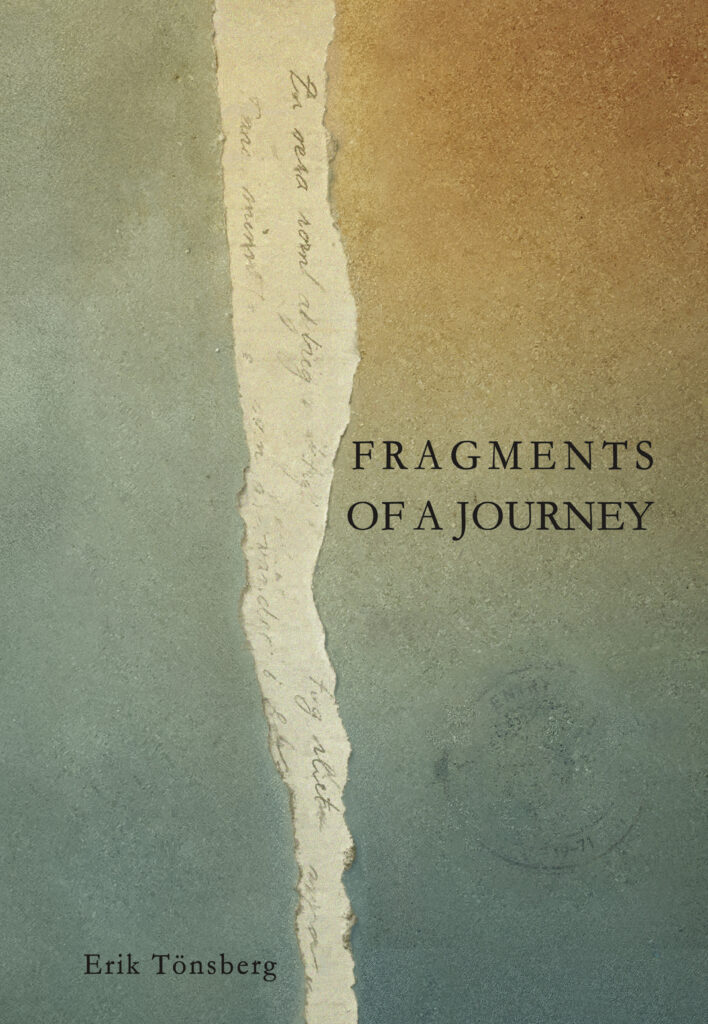
The fragmentary form is not primarily a literary device, but a response to memory itself. Memory never speaks in complete chapters. It gives us glimpses, shards, voices that sometimes fall into place and sometimes leave gaps behind them. To write in fragments is to acknowledge this limitation, but also to turn it into a strength: not to conceal the gaps, but to let them speak.
Fragments of a Journey is therefore not a journey in the conventional sense, with a chronological map from point A to point B. It is a journey through boundaries: those of the body, of memory, of language. It is a story about standing at the threshold of something unknown and daring to step across, even when the step is fragile and the direction uncertain.
Part I – The Historical Moment
To look at Fragments of a Journey today is to be transported to a moment in world history that was both uncertain and filled with possibility. The late 1960s and early 1970s were a time of dissolution and transformation, when young generations across the world sought new paths beyond the structures they had inherited. The Vietnam War cast a long shadow over everything, and the geopolitical divisions of the Cold War shaped everyday life in Europe. At the same time, another movement had already begun: a desire to break away, to travel, to explore, to leave behind the familiar.
Out of that movement emerged what would later become known as the Hippie Trail — the overland route from Western Europe through Istanbul, Tehran, and Kabul, onward to India and Nepal, sometimes all the way to Bali. It was at once a practical network of cheap hotels, restaurants, bus lines, and meeting places, and a mythological structure carrying dreams of freedom, community, and inner enlightenment. The journey eastward was both a geographical movement and a cultural program: a search in the foreign for what had been lost at home.
Fragments of a Journey is deeply shaped by this historical context, but it also transcends it. It does not portray the hippie movement as a sociological phenomenon, but as an existential condition: a young person moving through countries, borders, and states of mind, where every step becomes a test of what life might be. Yet the book still carries the full charge of that historical moment. To board a bus in Tehran or a jeep in Afghanistan was never merely a private act; it was also participation in a flow of bodies, ideas, and stories crossing continents.
It is important to remember that this was not tourism in the modern sense. Airfare was expensive, international hotel chains had not yet spread across the globe, and communications were slow. To set out along this route meant abandoning safety and throwing oneself into the unknown. A letter home could take weeks, and when someone disappeared along the way, there was no certainty anyone would ever learn what had happened. Out of this uncertainty grew a particular form of community: travellers helping one another, sharing rooms, sharing food, and sharing the sense of being part of something larger than individual holidays.
Yet beneath the surface, there was always ambivalence. To travel eastward also meant carrying the shadow of colonialism: the gaze directed toward Asia was both longing and exoticising. India became for many a projection of dreams of mysticism and spirituality; Afghanistan a backdrop for wildness and authenticity. In Fragments of a Journey, this doubleness is clearly visible: the traveller is both participant and observer, attracted and disillusioned, searching for something real while aware that the search itself risks turning other people and places into symbols rather than realities.
The historical situation also gives the journey’s symbolism a particular richness. The wreck of Antares, which opens the book, is more than a site in the western sea. It is an echo of a war only one generation removed, a ship sunk in the chaos of global conflict. To begin, there is a reminder that the world still bears the scars of catastrophe. The traveller therefore does not enter a neutral landscape, but a world marked by violence and loss. At the same time, the star Antares burns in the heavens above: a sign of distance, time, and cosmos. Between these two points — the wreck in the depths of the sea and the star in the universe — the entire book is suspended.
To travel in this era was to live with a doubleness: on one hand, bodily immediacy in dust, heat, cold, and hunger; on the other, a dream of something greater, a cosmic order that might give life meaning. This tension permeates both the historical generation and the inner structure of the narrative. Youth culture sought ecstasy — through music, politics, drugs, love — but repeatedly discovered that ecstasy was fleeting, that the body’s ordinary trials could never be escaped.
This is where Fragments of a Journey becomes more than a historical document. It manages to preserve existential seriousness amid the details of its time. A jeep stuck in the desert, a night at an Indian railway station, a silence in a letter — all these are as much symbols as concrete experiences. They reflect a generation that wanted to cast itself into the unknown, yet discovered that the unknown also carried pain, loss, and loneliness.
Part II – Symbolism and Fragments
When reading Fragments of a Journey, one soon discovers a structure that is not geographical but symbolic. The stations of the journey function not merely as places along a route, but as mirrors of existential states. The book’s most important chapters are in fact variations of the same movement, returning in different forms: Antares in the western sea, the Ganges in Benares, the veil in Sweden, the forbidden kiss in Ibiza, Mount Tahat in the Sahara. All are thresholds, passages, boundaries.
To begin in the depths of the sea, at the wreck of Antares, is to establish that the journey cannot be understood as an outward adventure alone. From the very first moment, it is a confrontation with death. The wreck is not merely the remains of a ship; it is also a memory of war, a monument to humanity’s destructive powers, a metal body shattered by catastrophe. To descend toward its hull is to approach the limit of life and breath, while simultaneously looking toward the star bearing the same name in the heavens. Sea and cosmos mirror one another. Here, the journey’s fundamental pattern is established: between the limitations of the body and the lure of infinite space.
Later, the same structure returns in other forms. In Benares, the traveller stands by the Ganges, where life and death flow together. Pilgrims bathe, bodies are cremated, and ashes drift into the water. The river becomes another threshold: not the silence of the ocean depths, but the cyclical movement of time itself, a reminder that everything is transient and yet eternal.
The Last Veil, by contrast, unfolds in Sweden, and its central symbol is precisely the veil — the cheap nylon cloth covering the face at the viewing of the dead woman, and the embroidered handkerchief discovered in the grandmother’s dresser. The veil becomes a charged image of the conditions of farewell: it conceals, but it also obscures. The cheap industrial veil represents the cold routine of institutions, death as an administrative process, while the embroidered cotton cloth represents something else entirely: the personal, the dignified, the memory-laden work of human hands.
When the narrator secretly replaces the veil covering her face, a kind of counter-ritual takes place — an act of love and defiance, an attempt to restore her dignity and bring family, memory, and intimate human craftsmanship back into the encounter with death. In this way, The Last Veil becomes as powerful a threshold as Antares or the Ganges: a passage between life and death, filtered through the intimacy of family bonds and the small gestures that preserve the fabric of memory.
In Ibiza, the symbolism shifts toward a more intimate scale. The forbidden kiss, Summer Silhouette, the fragmentary letters — here the same boundaries are reflected in the language of love. Love becomes a threshold that both opens and closes, promising closeness while pointing toward loss.
Yet this love is never idyllic. It mirrors the journey’s existential structure just as much as the depths of the sea or the heights of the desert. In the encounter with Marie, intimacy appears as something both absolute and fleeting: laughter in a summer evening, a touch lingering longer than words, a gaze that seems to contain the whole world and yet slips away. The forbidden kiss becomes an image of the journey’s entire logic — the moment one dares to cross the boundary while fully aware that everything may collapse.
And finally, Mount Tahat in the Sahara. Here, the journey reaches its culmination, literally and symbolically. After the depths of the sea, after the river, after the veil, after the fragility of love, the traveller stands alone on the summit. The body is exhausted, but in the silence, a certainty of cosmic connectedness emerges. The small metal sphere left behind becomes a concentrated symbol: a fragment, a miniature sun, a reflection of the universe itself. Everything that previously appeared in pieces is gathered into a single point.
Through these examples, we see that the journey is not linear but circular. Again and again it returns to the same theme: the threshold, the crossing, the edge. To almost drown, to almost lose oneself, to almost disappear. But also: to survive, to rise again, to breathe once more.
The fragmentary form plays a decisive role here. To write in fragments is to refuse linear narrative, to allow the gaps themselves to speak. Memory never functions like a continuous film; it is glimpses, shards, isolated moments. By shaping the journey as a mosaic rather than a straight line, the book becomes truer both to memory and to experience itself.
This fragmentary aesthetic also carries a philosophical dimension. It reflects human existence as incomplete, as a fragment of something larger. The fragment possesses a doubleness: it reveals its own lack while simultaneously hinting at a wholeness that can never be directly grasped. Here lies the existential insight at the heart of the book: we do not live in totalities, but in fragments, and yet through fragments we may glimpse the whole.
Thus, Fragments of a Journey is as much a philosophical meditation as a travel narrative. It asks questions that extend far beyond the colours of the hippie era. What is real? What remains, what disappears? How does one live with the certainty of death and loss, and yet also with the beauty of fleeting moments? What is love, when it always seems to dissolve into distance and silence?
Part III – Resonance Today
When we look back today at the journey portrayed in Fragments of a Journey, the difference between then and now becomes impossible to ignore. The geographical routes that could once be crossed on foot or by cheap buses are now closed by war, political borders, and security regimes. Afghanistan, which in the book appears both chaotic and alive, is inaccessible to most travellers today. Iran, once part of an open overland route, is now shaped by strict control. India and Nepal remain destinations, but under entirely different conditions: commercialised and absorbed into global tourism.
For that very reason, the narrative becomes a reminder of something lost — an experience of movement that was more exposed, more dangerous, but also more immediate. The traveller could not hide behind digital maps or remain constantly reachable. Every step was a genuine step into the unknown.
At the same time, the book speaks to questions that are timeless. Death, love, the trials of the body, memory, the limits of consciousness — these are experiences not bound to any particular decade. When the reader follows the diver’s descent toward Antares or the traveller’s solitude on Tahat, it is not merely a historical document from the 1970s. It is an image of humanity’s enduring struggle: to stand before the boundary between life and death, loss and reconciliation, limitation and infinity.
In this sense, the book becomes a work of existential literature. It does not seek to instruct or provide answers, but to ask questions. What does it mean to travel? To love? To stand face to face with death and still continue onward?
For contemporary readers, this may also become a reminder of our own era. We, too, live in a fragmented condition. The speed of globalisation, the endless noise of digitalisation, and the threat of the climate crisis — all these make wholeness difficult to grasp. We receive glimpses, data, images, and headlines, but rarely an overview. Fragments of a Journey suggests that this fragmentation is not merely a crisis, but also a possibility: that meaning itself may be sought within the fragments.
But the book also reminds us of the cost. Love is lost, letters remain unanswered, the body is wounded, the world is dangerous. This is no romanticised portrait of youthful wandering. It is a book that repeatedly shows that every vision is temporary, every threshold narrow, every fragment fragile. Yet there remains a certainty — not of safety, but of connectedness. A certainty of a cosmic continuity bridging the fragments.
When the narrative ends on the summit of Tahat, it does not end with resolution, but with silence. The metal sphere is left behind, the apricot juice tastes of triumph and exhaustion, the T-shirt bears the word “Triumph.” But the triumph is not conquest; it is stillness, reconciliation with a sense of belonging to something larger than the self. It is a humble triumph: not domination, but acceptance.
Today, as we search for meaning in a fragmented world, Fragments of a Journey may serve as a guide. Not a map, but a collection of shards pointing toward something greater. It shows that we do not need the entire picture in order to glimpse the whole.